


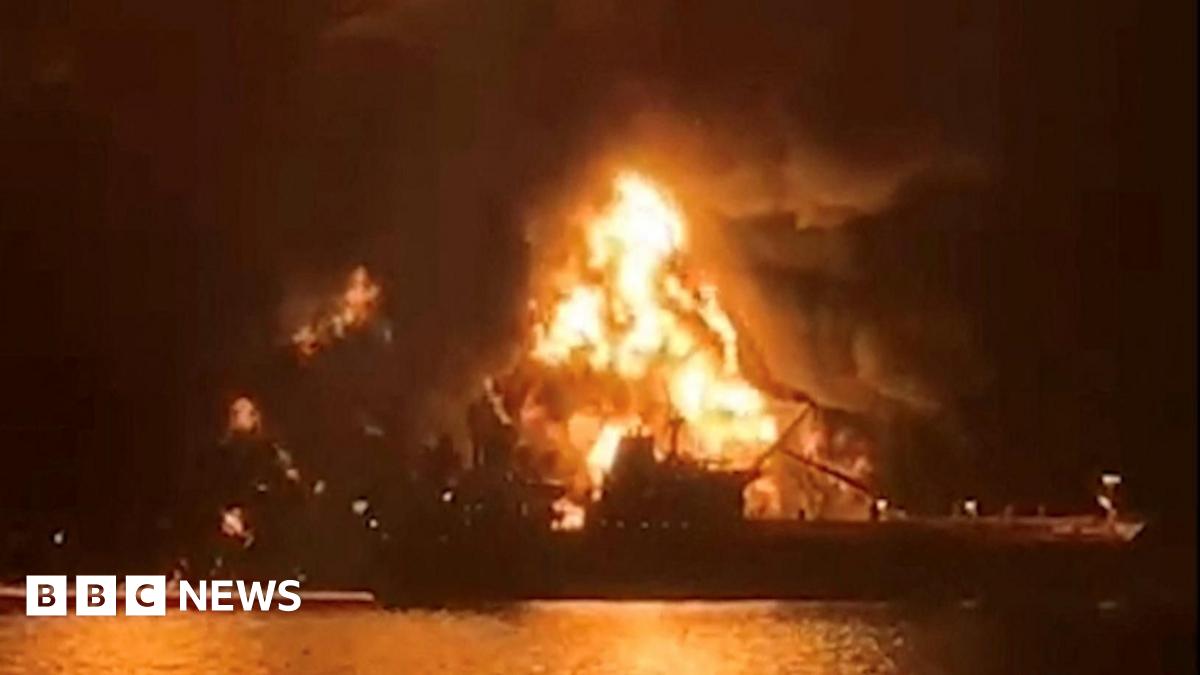
Brent crude oil prices have soared to $100 (£74.79) a barrel, marking a significant increase of 9% as reports emerge of explosions on two foreign ships near the port of Umm Qasr in Iraq. This spike in oil prices comes amidst escalating tensions and attacks on maritime vessels in the Arabian Gulf, the Strait of Hormuz, and the Gulf of Oman.
Recent incidents have seen a total of 13 ships targeted in the region since late February. The UK Maritime Trade Operations (UKMTO) reported that overnight, two ships off the coast of Iraq were struck, resulting in one fatality and injuries to 38 others, according to the head of the General Company for Iraqi ports.
In a separate incident, the UKMTO reported another attack north of Jebel Ali in the UAE, where a container ship was hit by an unknown projectile, causing a small fire onboard. The assessments of damages have been complicated by the darkness that enveloped the area following the attacks.
Intensifying Attacks and Rising Oil Prices
Osmond Chia, a business reporter, highlighted that the surge in oil prices persists despite an announcement from major countries, including the US and UK, to release record amounts of emergency oil reserves. The US-traded crude has also increased by 9%, now priced at $95.27 per barrel.
These developments come as Iran has ramped up threats against vessels navigating the Strait of Hormuz, a crucial passage for a significant portion of the world’s oil supply. The volatile situation has led to fluctuations in oil prices, which crossed the $110 mark earlier this week before stabilizing at the current rate.
In breaking news, authorities reported that two foreign tankers were struck by explosions near Umm Qasr, with one casualty confirmed and 38 crew members rescued from the affected vessels. Initial investigations suggest that explosive-laden boats originating from Iran may have been responsible for the attacks, as reported by various news agencies. The UK’s maritime monitoring services corroborated these claims, while Iraq's State Oil Marketing Organisation expressed deep regret over the incident.
Operations at all maritime terminals in the vicinity have been suspended as a precautionary measure. The attacks in the Gulf have intensified, as indicated by the latest reports from Iraqi officials stating that the maritime environment is increasingly unsafe.
Impact on Global Energy Security
The global economic landscape is feeling the repercussions of these conflicts, with rising oil prices stirring concerns over energy security. Brent crude prices reached the $100 mark in Asia trading, despite the collective decision from the 32 member countries of the International Energy Agency (IEA) to release 400 million barrels to mitigate supply concerns.
Iran has issued warnings that oil prices could escalate to $200 a barrel if attacks on shipping lanes continue. The situation has escalated further with Israeli military actions, which have included strikes on Hezbollah infrastructure in Lebanon. Reports from the ground indicate that the Israeli military conducted multiple strikes in Beirut, targeting ten different structures associated with Hezbollah.
In addition, the Israeli military has intercepted missiles reportedly launched by Iran and Hezbollah, indicating a complex and dangerous military landscape in the region. Meanwhile, aerial attack reports have also surfaced from Saudi Arabia, Qatar, Kuwait, and the UAE, all indicating a rise in hostile aerial activities.
The conflict's ramifications extend beyond regional borders, affecting global financial markets and raising serious concerns regarding oil supply security. As the situation develops, both regional and global stakeholders are closely monitoring the unfolding events, with significant implications for the future of energy prices and security.
Source: BBC News News